Monday, October 24, 2016

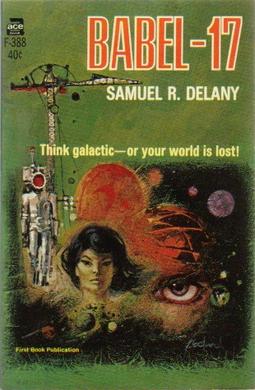
Week Ten: Babel-17


For this week I read the novel Babel-17, to which I giggled when I realize that this treacherous language was literally named "babble" 17. A story where the mere knowledge of a certain language could manipulate you into betrayal definitely gets the point across: that words hold power. As we explore the power that language can hold, and the fiction of ideas, I couldn't help but notice "Fahrenheit 451" as the featured movie for this week. Though it was a book that I had read in early high school, Fahrenheit 451 wasn't faded from my memory. Both Babel-17 and Fahrenheit 451 emphasized the importance of ideas, and how its power could crumple societies and mesmerize thousands. In both works, it was the idea planted in the mind by words that grew to be powerful, even threatening. Ideas take hold, and they invade the mind, encouraging its host to act according to its wishes and commands. Babel-17 featured a language weaponized to control people, altering their thinking and subsequently, their actions. As we come to realize the true power of language, it becomes apparent that in our modern world, we are manipulated by words as well. With information spreading so quickly and uncontrollably, novels like Babel-17 and Fahrenheit 451 cause us to become aware of its power over us and society, especially the people who are able to facilitate and manipulate its content and spread.


Thursday, October 20, 2016

Week Nine: Space Opera and the New Frontier

The concept of a "retro future" is a defining trait of Space Opera and was the first factor that really appealed to me visually. The in-class movie "Forbidden Planet" displayed this trait perfectly, in all its mute colored, analog glory. In this type of future, technology is advanced, but still clunky and analogue, presenting an interesting juxtaposition between the past and the future. From the media we saw in class, space opera seems to capture the dramatic and passionate flare of typical romances, the imaginative creations of science fiction, and the action of face paced flicks of the time period. It is an amalgamation of popular culture all mashed into one, then thrown into the far future, with a setting that can only be described as future imagined in the past. For this week, I read "The Nine Billion Names of God", which has less drama and action than Forbidden Planet, but still held the qualities of retro-future and science fiction suspense. It dealt with existential dread more than Forbidden Planet, but was still reminiscent of its contemporaries. I also watched the movie for "The Martian" (not the book, sorry!) and was pleasantly surprised by its scientific accuracy and attention to detail. This particular story was set apart from its peers in that its drama was much less dramatic, for lack of a better word, and that its science was very well explained and rooted in reality. Space opera is a very broad genre, picking the good bits from many other genre favorites, so naturally, space opera itself would contain a broad range of pieces. The Martian fell on the more scientific side, while Forbidden Planet fell on the more dramatic side, and Star Wars was more action-y. However, all of these films contain elements of each other, and form the wacky genre of fiction known as Space Opera.

Monday, October 17, 2016

Week Eight: The Ocean at the End of the Lane


I still remember first reading Coraline as a child, and then eventually, seeing the marvelous stop-motion animated Laika production in theaters some time later on. In Coraline I experienced a vivid world through a child's eyes, where the supernatural was ubiquitous and a natural part of reality, and where adults seemed to occupy a different space entirely, as if they were a different species. Reading "The Ocean at the End of the Lane" reminded me of all the good bits of Coraline and then some more. In both novels, the line between "children" and "grown-ups" seemed very clear, and to our young protagonists, the distinctions were obvious and non-negotiable. The "grown-ups" don't acknowledge or experience the magic ever-present in the world, and are ignorant to powers that function beyond their physical reality. The boy occupies the contemporary world that we know and understand, but supernatural forces as old as time itself disturb the peace of his normal life on the lane. I particularly liked the idea of these old, otherworldly powers having to adapt to modern culture. The terrifying, canvas flapping monster that is Ursula Monkton presents herself as a beautiful lady to humanity, and gains the trust of the narrator's family. The motives of Skarthach of the Keep are reminiscent of ancient myths; she exploits the monetary greed of humans, feeding on the financial troubles of everyone living in the lane, and appealing to their material wants. When adapted into a modern setting where the supernatural are not taken as seriously, we see these myths take on different forms. Rather than appear as an ancient monstrosity, they assume identities like Ursula's. In Coraline, the Other Mother's world is appealing, it is pleasant and easily accessible by Coraline. Ursula, similarly, is extremely charming, and lives in the same house as the narrator. Both evils are close to home, and alluringly deceptive. In this contemporary fantasy world, the ancient evil is closer than we think, hiding right under our noses, and less ugly than we would think.

Monday, October 10, 2016

Week Seven: The Night Circus


Set in a whimsical and magical environment, the Night Circus plays out through delicate prose that touches on just the right senses to set the scene. Rather than tell a story in a chronological, straightforward manner, the novel skips around the timeline, revealing bits and pieces of its world at a time. I appreciated the sensory imagery immensely, and I personally think mood and atmosphere are a very important element in delivering a compelling narrative. Telling a story of two young magicians forced into a game waged by their masters, the main conflict arises when the two start to follow their own desires and begin defying their teachers. Magical stories of this nature are commonly read by young teenagers and even preteens and have a large impact on their culture and mindset in a very sensitive time in their life. Often, these stories of magic are familiar to us because the protagonists are also coming of age and going through major changes in their life as they pass from child to adulthood, just like the target audience of these stories. The Night Circus, in particular, dealt with the expectations parents impose on children, and the implications of what can happen if the child begins develop independence and stray from the path that has been laid out for them. Marco and Celia were both groomed to follow the interests of their respective "parents" (or rather, mentors), and must abide by the rules of a game waged without their consent. Initially, they follow the paths presented to them, obediently excelling in their studies and competing dutifully. However, as time passes, their own interests develop, and they fall in love with each other. Like a teenager rebelling against their parents as they find their own way in the world, Marco and Celia rebel against their masters, making a statement that children should not be the puppets of their parents. For young adults also trying to navigate their way in the world, stories like this remind them that they are not alone and that their journey is valid. They tell the experiences of a strange limbo nestled between childhood and adulthood, only adorned with magic and supernatural embellishments, accompanying young adults through the foreign, if not magical, land that is adolescence.

Tuesday, September 27, 2016

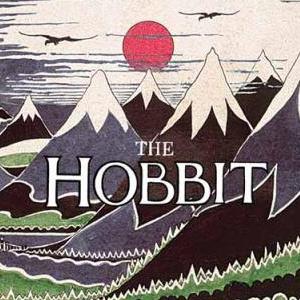
Week Six: The Hobbit


I've been wanting to read "The Hobbit" since my early high school days but, for some reason, never got around to doing it until I saw it as the reading for this week. Nevertheless, I thoroughly enjoyed it, and I can definitely see the appeal to the Lord of the Rings series. Reading "The Hobbit" gave me flashbacks to books like the Septimus Heap series and the Eragon series of my middle school days with its fantasy epic nature and a very distinct "hero's journey" plot line. I particularly liked the episodic nature of "The Hobbit", where the gang encounters dangers one after another but always makes it out in the end. Bilbo Baggins is also a classic, but reluctant, hero, and repeatedly saves the group from each situation. Ironically, despite his attempts to live a normal life, Bilbo is the most exceptional of them all, using his wits and light of step to save all the dwarves on countless occasions. "The Hobbit" follows the hero's journey storyline fairly well, with Gandalf calling Bilbo to adventure, and eventually leading him to cross the first threshold with the troll and goblin fight. The enemies they face grow stronger as the story progresses and peaks when the dragon Smaug is defeated and the dwarves achieve their goal. Bilbo then reaches his apotheosis when he finds the Arkenstone, and then proceeds to negotiates peace between the dwarves and the elves and band them together to defeat the goblin army. Of course, Bilbo returns to his old home with some treasure and is able to continue with his life, now with a few experiences and accomplishments under his belt.

Monday, September 19, 2016

Week Five: Witches

For this week, I read a couple of short stories: "The Cinder Maid", "Fair, Brown and Trembling", "The Baba Yaga", and "The Wicked Stepmother". Though all dealt with witches and magical females, there seemed to be a common element among the stories: the presence of an evil, older woman who threatened the livelihood of the young, female protagonist. This bad witch is usually a relative (an evil stepmother) and is noticeably jealous of the protagonist's youth and beauty, both of which she used to have but presumably no longer possesses because her aging. As we discussed in class, this motif of sorts applied to a lot of fiction about witches and even the idea of witches in general. Perhaps this is the manifestation of a misogynistic view of age on women as an undesirable trait, or maybe it is simply the result of a classic fairy tale cliche. However, I also noticed that these stories usually had a "good" older woman as well, one who gives the young protagonist what she needs to fight the evil power of the bad witch. This good woman usually takes on the fairy Godmother role, as we see in "The Cinder Maid" and "Fair, Brown, and Trembling", and supplies the girl with magical items and charms. In these stories, the "good witch" and "bad witch" take a very active hand in shaping the growth of the young heroine and essentially influence her upbringing. Thus if I were to draw a "moral of the story" from these tales, I would pin it to be more about how aging affects a person's character, whether they become spiteful of the youthful generation or if they instead support the youth and give them the necessary tools to continue building the future. The good witch embraces her age and is at peace with it. She uses her own powers and wisdom, which she earned with age, to help the young girl in building her own life and setting her on her own path. The bad witch is envious of the youth, and constantly has to put down the young girl to boost her own ego. She uses her powers to prevent the youth from surpassing her and is adamant in keeping her power, unable to acknowledge her own aging. To the girl, the existence of these two witches can also act as a warning, since later on in life, the girl has to make her own decision on whether she becomes the good witch or the bad witch. And inevitably, we too will have to choose which path to walk down.

Sunday, September 11, 2016

Week Four: The New Weird

The genre of the "New Weird" is definitely... weird. For this week, I read Lovecraft's "The Unnamable" as well as "What the Moon Brings". As a classic writer of weird fiction, Lovecraft's two short stories both gave off a sense of the surreal and the supernatural. In both stories, we can sense the presence of an outer supernatural force, a kind of cosmic power that exceeds the capabilities of our human understanding. This feeling of the "inexplicable" and mystery may be what categorizes these stories as "weird". Yet I feel that this feeling of the inexplicable is also what draws the audience into the story, and what captivates the audience to stay. I liked "The Unnamable" especially because it was truly best told by word as a story, its medium is fitting of the subject. As an artist, I tend to interpret things visually in my mind, but "The Unnamable" was purposely visually ambiguous. Thus, when told in the form of words, we- the audience- only experience the "unnamable" through someone else's account of the monstrous encounter. We experience the narrator's experiences second-hand, and the "unnamable" monster's appearance is thus passed through a filter if sorts before it reaches us. That element of writing has always fascinated me, and a concept that I hope to play around with in my future artwork.

Another interesting aspect of "The Unnamable" was its sense of irony and even self awareness. One of the main characters eventually commits the same character trope that he was disparaging moments before. Such a twist reminds me of other self-aware horror films such as "Scream" or "Cabin in the Woods" in which they poke fun and even satirize common tropes of the same genre that they occupy. This not only provides witty commentary on "genre fiction" but can also be entertaining to an audience jaded by the repetitive elements of the horror genre. I personally enjoy this type of irony since it seems to give second wind to a category of film and writing that is so riddled with cliches. Of course, I also enjoy it because its humorous when done well and can turn something that should be scary into something to be laughed at. When works don't take themselves too seriously like that, its not as intimidating to the audience and also acts as a great area of respite between all the other "edgy" pieces out there. As long as speculative fiction continues to exist, so will counter-fiction and satire, and I hope to consume many of both categories in the future.